• There was a time when I thought I had it all figured out.

    I’d buy crypto, find the next Bitcoin before the world noticed, hold it quietly for years — and one day wake up financially free.

    I imagined being the person who saw the future early.

    The genius who picked the right coin before it hit the headlines.

    And when it finally exploded, I’d have the chance to help my family, my community, maybe even the world.

    That was the dream.

    What I didn’t know was this:

    Crypto doesn’t reward those who forget.

    It rewards those who watch.

    How I Invested in a Crypto-AI Project (and What It Taught Me)

    At first glance, ChainGPT looked like everything I wanted:

    – A smart AI chatbot for Web3

    – Tools to generate smart contracts

    – Solidity audit features

    – Trading bots

    – NFT creation

    – And even a partnership with NVIDIA (or so it claimed)

    The website was sleek.

    The whitepaper used all the right words: staking, utility, ecosystem, deflation.

    And I thought — this could be it.

    Something real. Something future-facing.

    So I bought in.

    CGPT tokens on Ethereum.

    No second-guessing.

    But just before I added more, I paused.

    One question crossed my mind: Does it actually work?

    To access the AI tools, I had to stake tokens.

    Not use them — lock them for three years.

    I chose a 0% APY pool, the lowest option, just to test it.

    And then… nothing.

    – The chatbot didn’t reply

    – The “verify wallet” button did nothing

    – The dashboard stayed locked

    – No smart contract tools

    – No trading assistant

    – No working AI at all

    The platform took my tokens, marked them as “staked,” and gave me nothing in return.

    What shocked me most wasn’t the broken features.

    It was the structure — the entire system was designed to trap people.

    You could:

    – Stake for 3–5 years

    – Or buy £3,000+ worth to unlock features

    – Or farm “credits” for months via social media tasks

    But even then, there was no real access.

    No trial. No way to see what you were paying for.

    As for that NVIDIA partnership?

    Just cloud credits from NVIDIA’s startup program.

    No funding. No code. No integration.

    It was like buying a gym membership, walking in, and finding:

    – No working machines

    – No trainer

    – No refund

    But they still told you, “Well, you’re inside. That’s access.”

    And here’s the worst part:

    Even now, the token still holds value.

    Not because the product works — but because thousands of people staked for years.

    They can’t exit. They’re locked.

    Just sitting there, hoping the chatbot will someday say, “Hello.”

    What This Taught Me

    Crypto isn’t passive.

    You can’t just buy and forget.

    You have to stay awake.

    Before investing:

    – Use the product

    – Test the core feature

    – Look past the branding

    – Verify every claim

    – Question the roadmap

    – Find the small print

    A good website isn’t proof.

    A popular token isn’t safety.

    And staking without testing is a trap, not a strategy.

    Strategy Is a Verb

    I used to think “strategy” meant buying early and waiting.

    Now I know it means checking daily, asking questions, pulling out when needed, and never falling in love with a token.

    Hope is not a strategy.

    Research is.
  • We’ve all been there.

    You see a coin with a wild name.

    The chart is green.

    The community is loud.

    And part of you thinks: What if this is the one?

    You tell yourself it’s just £50. Maybe £100.

    Just for fun.

    But behind every “just for fun” is someone who clicked too fast —

    and watched their money disappear like smoke.

    Before you buy that memecoin, pause.

    There are things you must check — things no one warned me about at the start.

    Who Owns the Tokens?

    Every memecoin has a total supply — maybe 1 billion, maybe 1 quadrillion.

    But the question is: Who owns most of it?

    Smart traders check token holders before buying.

    If one wallet holds 50% of the supply, run.

    If ten wallets hold 90%, think again.

    Use Etherscan, BNBScan, or Solana Explorer (depending on the chain).

    Paste the token’s contract address and check the “Holders” tab.

    If the top holders can dump, they probably will.

    What Does the Smart Contract Say?

    You don’t need to be a coder.

    Use tools like TokenSniffer or GoPlus Security.

    Look out for:

    • Trading freeze functions

    • Owner control over taxes

    • Ability to block wallets

    • Liquidity removal options

    If the contract allows any of these — it’s risky.

    Is the Liquidity Locked?

    Liquidity allows you to sell.

    If it’s unlocked, the dev can remove it.

    If it’s locked, there’s less risk.

    Check it via:

    • DEXTools

    • Team.finance

    • Mudra

    Find how much liquidity is locked — and for how long.

    Is the Market at the Bottom or the Top?

    Ask yourself: Are you early… or late?

    Top signs:

    • Viral buzz

    • Influencer hype

    • Volume spikes

    • Price shooting up

    Bottom signs:

    • Low interest

    • Slow growth

    • No hype

    • Quiet chats

    If it’s trending, you’re likely too late.

    Real Story: The Girl Who Bought the Top

    She bought ElonMoonRiseX1000 for $300.

    In 24 hours, her wallet showed $18,000.

    But she couldn’t sell.

    The contract blocked all trades.

    The dev vanished.

    The liquidity was gone.

    Her lesson?

    Don’t buy what you can’t exit.

    How Much Should You Invest?

    Only what you’re ready to lose.

    Memecoins aren’t investments.

    They’re high-stakes games.

    Set a number. Stick to it.

    Never add more just because the chart is green.

    And always have a plan to exit — even before you buy.

    Final Thoughts

    Memecoins are fun.

    They’re fast.

    They’re wild.

    But they’re also unpredictable.

    The real win is keeping your money safe —

    and learning before it’s too late.

  • Lately, I’ve been closely watching what’s happening with Solana.
    And let me tell you — there’s serious accumulation going on.
    While small traders are panicking and selling, big players are silently loading up, steadily and deliberately. You can see it in the wallets, in the activity, even in the mood.

    What is Solana — and how is it different?

    If I had to put it simply:
    • Ethereum is like a powerful, reliable desktop computer.
    Strong and secure, but sometimes slow and expensive.
    • Solana is like a modern smartphone.
    Fast, sleek, affordable, and always connected — with endless apps at your fingertips.

    Transaction fees on Solana are less than a cent.
    The speed? Blazing.
    The user experience? Next level.

    What really surprised me?

    Once I entered the Solana ecosystem…
    I didn’t want to leave.

    Everything just works — fast, smooth, intuitive.
    And the deeper you go, the more you discover.
    You start to feel like this isn’t just some blockchain project. It’s a growing, living economy.

    My First Real DeFi Experience: Jupiter

    Jupiter was my first real entry point.
    A decentralized exchange (DEX) where you stay in full control:
    • No accounts.
    • Your funds stay in your wallet at all times.
    • No middlemen.
    • Nothing can be frozen or hacked — because it’s all on-chain.

    After using centralized exchanges like Binance or Kraken, this felt like an entirely different level of security.

    Solana Is Launching Its Own Smartphone — and I’m Waiting for Mine

    Solana isn’t just a blockchain anymore.
    They’re launching physical smartphones — built for Web3.
    And this is already their second phone.

    I’ve preordered mine, and I’m genuinely excited.
    I’ll be doing a full review as soon as it arrives.

    For me, this isn’t just a gadget.
    It’s proof that Solana is building a new reality — not just another altcoin.

    Solana Isn’t Just Surviving. It’s Thriving.

    New projects are popping up constantly.
    Every month brings more tools, more tokens, more wallets, more innovation.

    Solana isn’t just an Ethereum alternative.
    It’s its own economy. Its own direction. Its own energy.
    And if you feel like something is shifting — you’re not wrong.

    But I’ve gone a bit too far ahead.

    In the next chapter, I’ll break down the difference between centralized exchanges and decentralized ones — and why it matters more than most people think.

    Until then — feel free to subscribe.

    Your support means a lot.

  • What Will the Future with Crypto Look Like?

    Imagine a world where:

    Your money doesn’t lose value because of a politician’s decision. You can send £5 across the globe — instantly, with no bank. People with just a phone can earn, trade, and save — without asking for permission. Governments can’t print more money and silently steal your savings through inflation. Every transaction is recorded in a public, unchangeable ledger — the blockchain — and no one can fake it.

    This isn’t science fiction.

    This is what crypto is already doing in countries where systems have collapsed.

    What Is the Bitcoin Protocol?

    Bitcoin is not just a coin.

    It’s a protocol — like the internet, but for money.

    Core principles:

    21 million coins only — no inflation. Decentralised — no single authority, everyone verifies. Unbreakable — protected by global computing power. Peer-to-peer transfers — no need for banks.

    Bitcoin is digital gold.

    It can’t be printed, copied, or seized without your private key.

    What About Ethereum?

    Ethereum is a blockchain for programs, not just money.

    Imagine a bank, a marketplace, a casino, and a court — all running in code.

    What makes Ethereum powerful:

    Smart contracts — programs that run automatically. DeFi — decentralised finance: loans, trading, earnings — with no banks. NFTs, DAOs, gaming, tokenisation — a whole economy built on Ethereum.

    Ethereum isn’t just currency — it’s the infrastructure of a new financial internet.

    Why Is Crypto the Money of the Future?

    It can’t be inflated by governments. Bitcoin has a fixed supply. It’s the opposite of fiat currencies. You don’t need a bank to store it. Your wallet = your money. No permissions, no censorship. It’s global. One standard, regardless of borders. Transparency and security. Every block is a receipt. Every transaction is verified. Control means freedom. No middlemen. No freezing of accounts. No asking for permission.

    Why Are Poorer Countries Adopting Crypto?

    Because their traditional currencies are collapsing.

    Imagine:

    Your salary loses half its value in one year. Your bank freezes your savings. The government seizes your dollars and gives you worthless paper.

    This is not fantasy — it’s Argentina, Venezuela, Zimbabwe, Lebanon.

    In these places:

    People buy Bitcoin to protect value. They use stablecoins (like USDT) for payments. They earn through DeFi when real-world jobs disappear.

    Crypto became economic survival, because:

    It doesn’t depend on a failing banking system. It holds value better than local money. It’s accessible to anyone with a smartphone.

    Is It Safer?

    Not always. But with the right knowledge — yes.

    Why crypto can be safer:

    Code replaces trust. Blockchain is tamper-proof. Your funds are untouchable without your keys. Your wallet is your bank.

    But education is key.

    Without it, crypto is a jungle.

    With it, it’s a tool for financial independence.

    Final Thoughts

    Crypto is not just about investing.

    It’s a technological answer to a broken financial system — especially in places where people have lived for decades fearing that everything could vanish.

    In the future:

    Bitcoin = digital gold Ethereum = financial internet Stablecoins = global digital dollars Wallets = new personal banks

    And those who learn how to use it won’t just survive.

    They’ll build a better future.

    Web3 is integrating — just like Web2 and Web1 once did.

    If you feel like the world is changing — you’re not wrong.

    But why does Web3 keep growing?

    Because this has happened before — more than once:

    Web1 (1990s): The internet with simple static pages. People didn’t understand why it mattered. But it became the foundation for everything. Web2 (2000s): Social media, YouTube, bloggers. At first, people laughed. Then they couldn’t look away. Web3 (2020s): Crypto, DeFi, NFTs, DAOs. Today it seems chaotic. But that’s exactly what the future looks like in its earliest form.

    What’s ignored at first… is mocked later… and then it changes the world.

    Web3 doesn’t ask for permission.

    It simply offers the tools — and waits to see who’s bold enough to use them.

    If this post resonated with you, feel free to subscribe.

    I’m just sharing thoughts — raw, real, and sometimes messy — as I explore the world of crypto and how it’s shaping our future.

    It really helps to know someone out there is listening.

    Your CryptoMama

  • It started like most mistakes do — quietly.

    No warning, no red flags, no panic.

    Just a little curiosity, a bit of excitement, and a name that made me laugh.

    I was scrolling through crypto charts when I stumbled on something absurd.

    A token with a name so ridiculous, so chaotic, so shamelessly over-the-top…

    I couldn’t help myself.

    HarryPotterObamaSonic420Inu.

    It was trending.

    People were posting screenshots of crazy profits.

    The price had multiplied overnight.

    And something inside me whispered, “Maybe this is your moment.”

    I had £100 I was willing to risk.

    So I bought it.

    No research. No reading. Just vibes.

    At first, it worked.

    My wallet doubled, then tripled.

    I refreshed the page, and the number kept rising.

    But then came the moment I tried to sell.

    And nothing happened.

    No error. No confirmation. Just… nothing.

    I tried again. Then again. Still nothing.

    Then I paid the gas fee — and the transaction failed.

    That’s when I realised: I wasn’t holding money.

    I was holding something that looked like money — but wasn’t.

    The developers had locked trading.

    The liquidity pool was under their full control.

    The smart contract — the code that should’ve protected buyers — had been written in their favour from the start.

    There was no way out.

    And I wasn’t the only one.

    It was my first real lesson in crypto:

    Just because a number is in your wallet doesn’t mean it’s yours.

    So What Are Memecoins, Really?

    Memecoins are digital tokens that start as jokes, often with no real utility or purpose — other than to entertain.

    They tend to have funny names, silly logos, and chaotic communities.

    They spread fast, attract attention, and sometimes create massive short-term gains.

    Think of coins like:

    • Dogecoin — the original memecoin, created in 2013 as a joke.

    • Shiba Inu — another dog-themed coin that gained billions in market cap.

    • Pepe, Floki, and yes — even TrumpCoin.

    Trump-Themed Coins: Hype Meets Controversy

    There are dozens of tokens themed around Donald Trump.

    Some were launched by fans.

    Others by trolls.

    Most have no official connection to Trump himself — just his name, image, or branding.

    They rise fast.

    Some even get listed on major exchanges, for a while.

    But most are short-lived — designed to catch attention during news cycles or election seasons.

    One day, a Trump token goes viral.

    The next, it crashes and burns — with thousands left holding worthless bags.

    What I Learned

    Memecoins can be fun.

    They create communities, spark viral moments, and sometimes turn £10 into £1,000.

    But they’re also risky.

    They’re easy to manipulate.

    They attract inexperienced investors.

    And they often rely on hype rather than substance.

    The danger isn’t just the volatility.

    It’s the illusion.

    They make you feel like you’re part of something — until it vanishes overnight.

    That first experience — buying something for the name, then watching it trap me — shaped everything that came after.

    Now I read smart contracts before I click.

    I check liquidity.

    I ask myself: Can I actually exit?

    And most of all: Is this a meme — or a minefield?

    Because in crypto, the line is thinner than you think.

  • Part 1. Why is Bitcoin at £80,000?

    Bitcoin has reached new highs and is now worth over £80,000. This isn’t just another hype cycle. Several deep factors are driving this price:

    Bitcoin ETF Approved in the US This means that large institutional investors (hedge funds, pension funds, insurance companies—not just crypto enthusiasts) can now invest in BTC legally and easily via traditional exchanges. They don’t need to buy the actual Bitcoin — they buy shares that are tied to its price. That’s what an ETF is (more below). Bitcoin’s Supply is Limited Only 21 million BTC will ever exist. The supply is fixed while demand keeps rising. It’s like land in central London — they’re not making any more, but everyone wants it. Global Inflation and Uncertainty In times of instability, people turn to “digital gold.” Bitcoin is the perfect asset: independent, decentralized, and time-tested.

    Part 2. Why Are Whales Buying Ethereum?

    While everyone is watching BTC, the biggest players (“whales”) have quietly started accumulating ETH. Why?

    Ethereum ETF Expected Soon Just like with Bitcoin, institutions want exposure to ETH — but through regulated financial products like ETFs. This could open the floodgates to billions in institutional money. Ethereum is More Than a Cryptocurrency It’s the backbone of Web3, DeFi, NFTs, and real-world asset tokenization. If Bitcoin is digital gold, Ethereum is the infrastructure of a new internet. Transition to Proof of Stake (PoS) Ethereum no longer uses mining. It’s now energy-efficient, and new coins are issued through staking, creating deflationary pressure. Over time, ETH supply could actually shrink — pushing the price higher. Whales Always Enter Before the Crowd They buy before retail investors rush in. The same happened with BTC in 2023, before the ETF approval. Now they’re doing the same with ETH.

    What Is an ETF and Why Does It Matter?

    An ETF (Exchange-Traded Fund) is a financial instrument that allows investors to buy an asset (like Bitcoin or Ethereum) like a regular stock on traditional exchanges such as Nasdaq, without needing to handle crypto wallets or private keys.

    Why this changes everything:

    Institutions can invest billions with ease Crypto gains mainstream legitimacy Entry barriers for retail investors are lower This could permanently reshape the crypto market

    Conclusion

    Bitcoin hitting £80,000 is not the end — it’s a new phase. The price surge is driven by ETF approval, limited supply, and rising demand. Ethereum is likely next in line. Whales know it and are preparing for the next wave. ETFs are the bridge between crypto and traditional finance — and that bridge has already been built for Bitcoin, with Ethereum next.

    So if you feel it’s not too late — you’re probably right. But the whales are already moving, and they’re not waiting around.

  • A Straightforward Explanation

    Ethereum (ETH) is rising fast — but it’s not a coincidence, and definitely not “magic internet money.” This is the result of deeper shifts that are worth understanding. No jargon — just facts:

    1. ETFs = Big Money is Entering

    Major American financial players are joining the game. Ethereum ETFs are like a “legal wrapper” for ETH that allows banks, funds, and pension systems to invest. We’re talking billions — literally.

    This isn’t retail FOMO. This is institutional accumulation.

    1. A Lot of ETH is Locked in Staking

    When you stake ETH, you can’t just sell it instantly. And millions of coins are locked this way. That means there’s physically less ETH available on the market.

    Less supply → higher price. Classic economics.

    1. Many Are Moving From BTC to ETH

    Bitcoin already had its breakout. Now people are rotating profits from BTC into ETH, expecting it to be the next one to run. On-chain data confirms this.

    This isn’t panic. This is positioning.

    1. Anticipation of a Major Breakthrough

    Crypto runs on narratives. Right now, the dominant one is:

    “ETH will become the foundation for a new financial system — decentralized, transparent, programmable.”

    That alone can drive price — even without breaking news.

    1. Whales Are Not Selling

    Blockchain data shows large wallets (whales) are not dumping ETH. They’re buying and moving it to cold storage or staking it.

    They’re not exiting — they’re preparing for something big.

    Conclusion

    ETH isn’t rising because of hype or memes. It’s rising because:
    • Institutional players are accumulating it
    • There’s low supply in circulation
    • Its role in the future economy is becoming central

    And this might only be the beginning.

  • A token is like digital money that you can create yourself.

    It can be useful if you’re building something or want to grow a community.

    Why would you want one?

    If you’re a photographer — a token could unlock secret photo albums. If you’re a coach or mentor — people with the token could book a call. If you have a blog or a channel — the token could give access to extra posts or chats. If you’re just creative — the token could be your personal badge to share with followers.

    How to create a token?

    Think about why you need it. For example: “I want my token to unlock private videos.” Choose a platform. Easiest options are no-code sites like: thirdweb.com, mint.club, soltools.org Pick a name. Like: BANANACOIN or CRYMA Create the token. It takes 5–10 minutes. Sometimes you need a little crypto to pay a small fee. Tell people what the token is for. Just having a token isn’t enough. People need to know what it does.

    What you should know

    Creating a token is easy.

    Making it useful and interesting is the hard part.

    But if you have an idea — try it. It’s a great experience.

    I’m testing my own token right now.

    If you’re curious, follow along — I’ll share everything I learn.

    BananaCoin: An Experiment That Might Surprise You

    What if we created our own token — not for investors, not for hype, but simply to play with the idea?

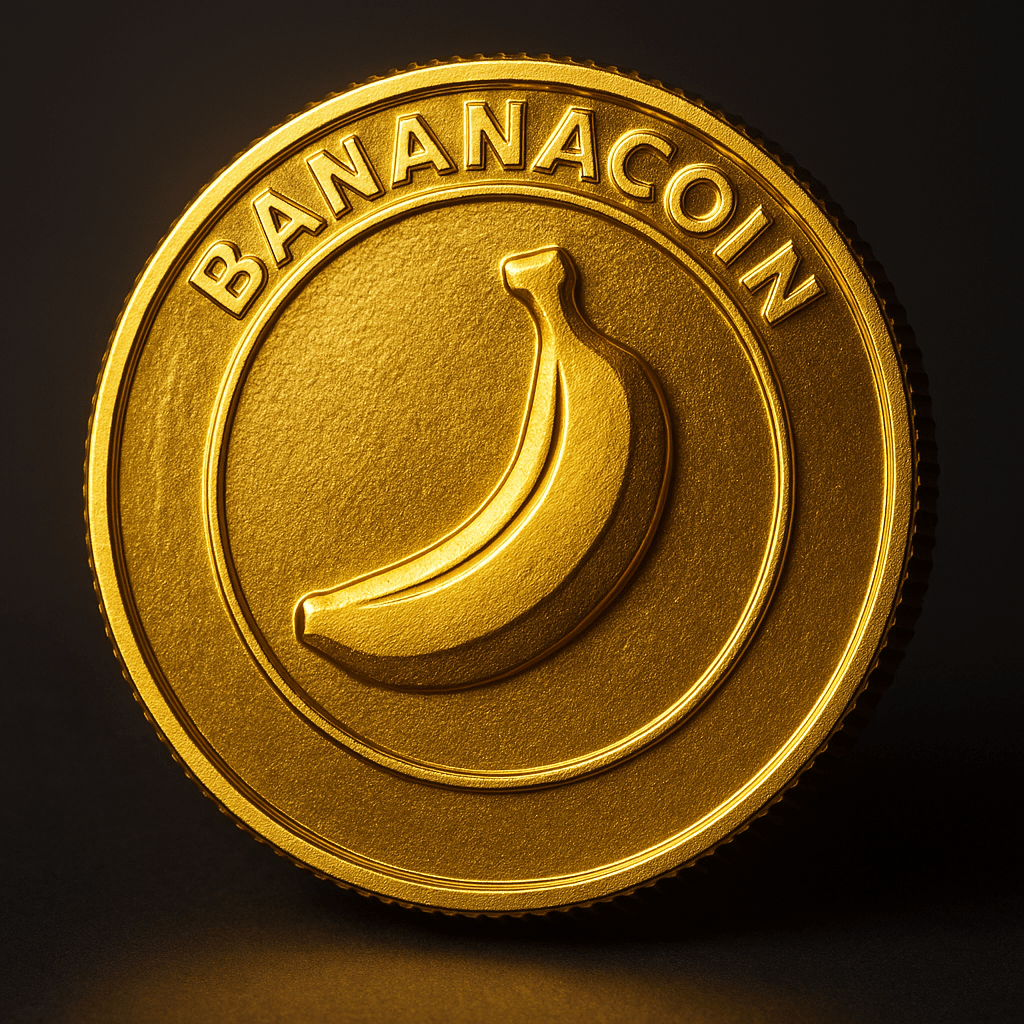
    Meet BananaCoin.

    The name is silly. But the purpose is serious: to learn how crypto works by doing it.

    What will BananaCoin do?

    BananaCoin doesn’t promise millions.

    It won’t be listed on Binance tomorrow.

    But it can:

    unlock access to a private chat or channel act as a “thank you” token you can send to someone be used as a ticket for a game or small quest give access to a giveaway or poll or just be a fun memecoin you can share with your friends

    How will we create it?

    Choose a platform — for example, mint.club or [thirdweb.com] (no coding needed). Pick a name and write a short description — BananaCoin, of course. Decide how many tokens to create (100? 1 million?). Design the token — done! Ours is shiny and gold. Explain what it’s for — a token without a purpose is just a number. Distribute the first tokens — to readers, supporters, or anyone who joins in.

    Why are we doing this?

    To learn.

    To stop being afraid of the technical stuff.

    To understand that you can build something on your own.

    Maybe BananaCoin is just a joke.

    Or maybe it’s the beginning of something more.

    Join the experiment.

    I’ll share every step, every mistake, every idea.

    CryptoMama

    Swindon, 2025

  • One of the most important things I’ve learned in crypto is this:

    You can’t just press “buy” and hope for the best.

    Let me tell you about a moment that really opened my eyes.

    A regular investor — not a whale, not a fund, just someone with money and enthusiasm — decided to go all in on a promising altcoin. He’d done some research, read the news, liked the tech and tokenomics. And the price was low. It looked like the perfect time to invest.

    But there was one problem:

    He didn’t check the liquidity or trading volume.

    Instead, he placed a huge buy order — around £1,000,000 in one shot.

    What happened next?

    He wiped out the entire order book.

    The price jumped from £0.22 to £0.40 — not because of market hype or demand, but because his own buy order caused the pump. He was essentially buying from himself at higher and higher prices.

    This is what’s known as price impact — when your own transaction moves the market more than you expected.

    It’s what happens when you crash into a low-liquidity market instead of moving with it.

    What Could He Have Done Differently?

    He could have used a grid of limit orders.

    He could have split the amount into smaller chunks.

    He could have let the market breathe.

    Buying slowly over time — instead of in one big rush — would’ve helped him get a better average price without triggering panic or sudden spikes.

    Think of the market like an ant colony:

    If you hit it with a stick, it freaks out.

    That’s what happened here.

    I Was There. I Watched It Happen.

    This wasn’t a story I read on Twitter — I saw it live.

    It happened with Axelar.

    I was watching closely, and right away, I had questions.

    The devs didn’t post any updates. There was no news. Just… chaos.

    So I went to Etherscan.

    I traced the transactions.

    And suddenly it all made sense.

    This wasn’t a pump driven by fundamentals.

    It was a pump caused by one big buy — one person moving too fast, with too much, in the wrong place.

    Why I’m Sharing This

    No shame to the person who bought.

    No financial advice here.

    Just a real story from crypto.

    Crypto makes you curious.

    It forces you to ask questions, connect dots, and look deeper.

    If you’ve seen something like this happen, I’d love to hear your story too.


    By CryptoMama™ Swindon 2025
  • At first glance, Web3 might seem like a niche world — something only developers, crypto traders, or early tech adopters care about.

    But in reality, Web3 is slowly moving toward the mainstream.

    In this chapter, we explore why Web3 is more than a passing trend.

    It’s the next step in how we’ll all use the internet.

    From Platforms to Protocols

    In Web2, the internet is built around platforms: Facebook, Google, Amazon.

    They store your content, control your access, and profit from your data.

    Web3 changes that entirely.

    Instead of companies hosting your content and managing your identity, Web3 is based on open, decentralised protocols.

    You connect directly. You own your data. You don’t need permission to participate.

    Web3 gives users control — not just access.

    Why Web2 Companies Are Paying Attention

    Big tech companies are not ignoring this shift — they’re preparing for it.

    • Meta is investing in the metaverse and blockchain development.

    • Google Cloud now provides blockchain infrastructure tools.

    • Visa and Mastercard are experimenting with crypto payments.

    • Reddit created blockchain-based community tokens.

    • Starbucks launched a loyalty program using NFTs.

    These companies are not doing this for fun. They’re watching where the internet is going — and adjusting.

    Web3 offers a new kind of digital economy.

    An economy where users earn, govern, and contribute — not just consume.

    What’s Still Missing: Simplicity

    Right now, Web3 is not easy to use.

    • Wallets are unfamiliar.

    • Seed phrases feel scary.

    • Interfaces are confusing.

    • Mistakes can be irreversible.

    This complexity is what keeps many people out — for now.

    Layer 3 — The Gateway to Mass Adoption

    Layer 3 is the missing piece.

    If Layer 1 is the foundation, and Layer 2 brings speed,

    then Layer 3 is where the user experience becomes seamless.

    Layer 3 helps developers build intuitive, human-friendly apps — ones that feel just like the apps people already use every day.

    No crypto jargon. No visible tokens. No popups asking for gas fees.

    Just buttons that work.

    It’s the layer that makes blockchain invisible — and useful.

    Think of it like contactless payment:

    You tap your phone and pay.

    You don’t see the network, the security layers, or the bank verification.

    It just works.

    That’s what Layer 3 can do for Web3.

    Web3 Isn’t a Revolution. It’s an Evolution.

    Like all big shifts, adoption takes time.

    People didn’t switch to smartphones overnight.

    It happened gradually — as tools got better and life got easier.

    The same is happening with Web3.

    The technology is catching up.

    Companies are building.

    And people are starting to explore — slowly but steadily.

    When Layer 3 becomes standard, Web3 will feel natural.

    Like it was always supposed to be there.

    By CryptoMama™
    Swindon, 2025